



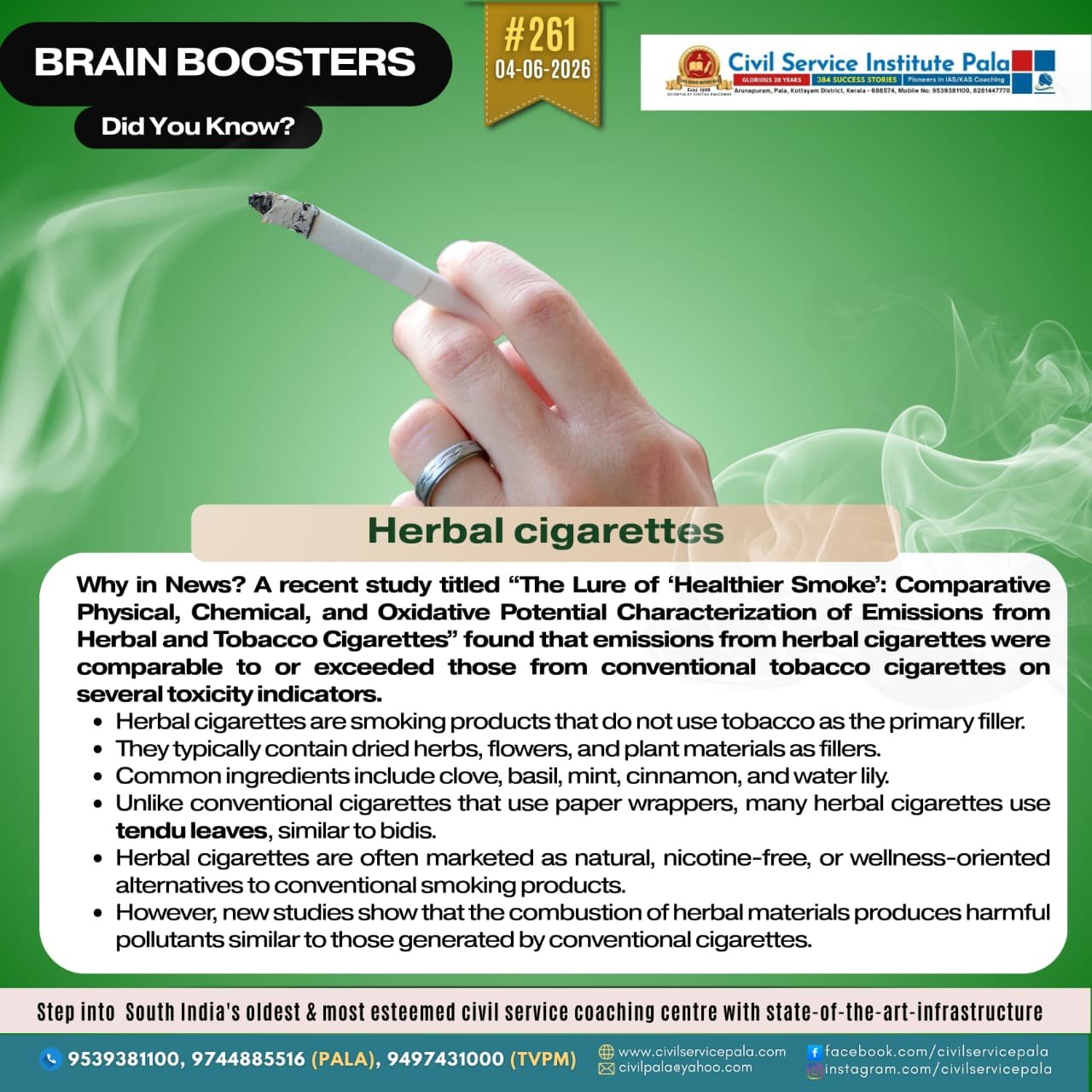
Herbal Cigarettes
Why in News?
A recent study titled “The Lure of ‘Healthier Smoke’: Comparative Physical, Chemical, and Oxidative Potential Characterization of Emissions from Herbal and Tobacco Cigarettes”, published in the Journal of Hazardous Materials, found that emissions from herbal cigarettes were comparable to or exceeded those from conventional tobacco cigarettes on several toxicity indicators.
The findings challenge the popular perception that tobacco-free or nicotine-free smoking products are inherently safer.
What are Herbal Cigarettes?
Herbal cigarettes are smoking products that do not use tobacco as the primary filler.
They typically contain dried herbs, flowers, and plant materials instead of tobacco.
Common ingredients include clove, basil, mint, cinnamon, green tea, chamomile, and water lily.
Unlike conventional cigarettes that use paper wrappers, many herbal cigarettes use tendu leaves, similar to bidis.
Herbal cigarettes are often marketed as natural, nicotine-free, or wellness-oriented alternatives to conventional smoking products.
Why are Herbal Cigarettes Popular?
Many consumers perceive herbal cigarettes as safer because they do not contain tobacco or nicotine.
Some products are marketed with claims of reducing stress, anxiety, or smoking dependence.
These products are often positioned as an intermediate step between tobacco use and smoking cessation.
Attractive flavours, herbal branding, and wellness-oriented marketing make them particularly appealing to younger consumers.
Easy online availability has contributed to their growing popularity.
Harmful Effects and Health Concerns
Absence of tobacco does not eliminate the health risks associated with smoking.
The combustion of herbal materials produces harmful pollutants similar to those generated by conventional cigarettes.
Herbal cigarette smoke contains particulate matter, carbon monoxide, hydrocarbons, and trace metals, all of which can affect human health.
Studies indicate that herbal cigarette emissions can generate high levels of reactive oxygen species, which contribute to inflammation and tissue damage.
Fine particles emitted during combustion can penetrate deep into the lungs and are associated with respiratory and cardiovascular diseases.
Some herbal cigarette variants have been found to contain elevated concentrations of heavy metals despite being marketed as natural products.
Health risks arise primarily from the process of combustion and inhalation rather than from the presence of tobacco alone.
Key Scientific Concepts
Oxidative Potential
Oxidative potential refers to the ability of smoke particles to generate reactive oxygen species.
Higher oxidative potential is associated with greater biological damage, inflammation, and disease risk.
Fine Particulate Matter
Combustion produces extremely small particles that can enter the respiratory system and bloodstream.
These particles are increasingly linked to cardiovascular and respiratory disorders.
Regulatory Challenges
Herbal cigarettes often fall into a regulatory grey area because they are marketed as tobacco-free products.
India's Cigarettes and Other Tobacco Products Act (COTPA), 2003 primarily regulates tobacco products through warning labels, advertising restrictions, and public smoking rules.
Products marketed as tobacco-free may not always be subject to the same regulatory requirements.
This gap can enable misleading health claims and unrestricted marketing practices.
