



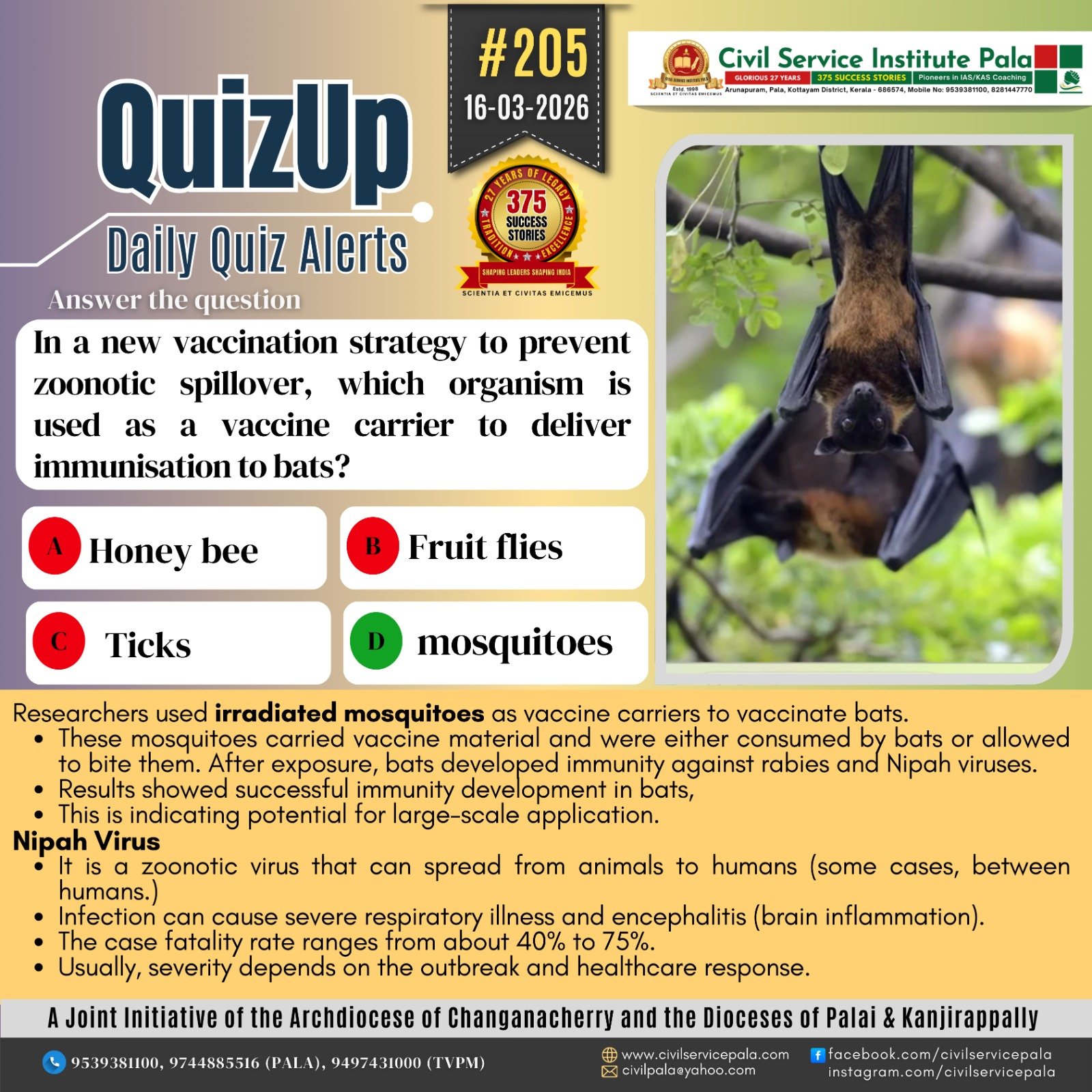
Bat Vaccination Techniques
Bat Vaccination Techniques to Prevent Zoonotic Spillover
New Approaches Developed by Researchers
1. Mosquito-Based Vaccine Delivery
o Researchers used irradiated mosquitoes as vaccine carriers.
o These mosquitoes carried vaccine material and were either consumed by bats or allowed to bite them.
o After exposure, bats developed immunity against rabies and Nipah viruses.
2. Salt-Attraction Vaccine Traps
o Scientists designed traps that exploit bats’ natural craving for salt.
o The traps provide vaccine-mixed drinking water, encouraging bats to consume it.
o This allows vaccination without physically capturing or handling bats, which is normally difficult.
Testing and Effectiveness
o Both techniques were tested in laboratory and simulated field conditions.
o Results showed successful immunity development in bats, indicating potential for large-scale application.
Relevance to One Health
• These strategies support the One Health approach by preventing zoonotic viruses in wildlife populations, thereby reducing the risk of disease transmission from animals to humans while protecting ecosystem health.
Nipah Virus
Overview
• Nipah Virus is a zoonotic virus that can spread from animals to humans and, in some cases, between humans.
• Infection can cause severe respiratory illness and encephalitis (brain inflammation), making it a major public health concern.
• The case fatality rate ranges from about 40% to 75%, depending on the outbreak and healthcare response.
Natural Host
• The natural reservoir is fruit bats of the Pteropodidae family (commonly known as flying foxes).
• These bats can carry the virus without showing signs of illness, allowing the virus to persist in nature.
History and Geographic Spread
• The virus was first identified in 1998 in Malaysia among pig farmers.
• In 1999, an outbreak occurred in Singapore linked to infected pigs imported from Malaysia.
• Later outbreaks were reported in Bangladesh and India from 2001 onwards, with Bangladesh experiencing almost annual outbreaks.
• An outbreak was also recorded in Philippines in 2014.
Transmission
Nipah virus can spread through several pathways:
1. Animal-to-human transmission
o Direct contact with infected animals such as bats, pigs, or horses.
2. Food-borne transmission
o Consumption of fruits or fruit products (e.g., raw date palm sap) contaminated by infected bats.
3. Human-to-human transmission
o Close contact with infected individuals, especially family members, caregivers, and healthcare workers.
Symptoms
Common symptoms include:
• Fever
• Headache and confusion (neurological symptoms)
• Difficulty breathing or cough (respiratory symptoms)
Severe cases may lead to encephalitis and respiratory failure.
Impact on Animals
• The virus can cause serious disease in livestock, particularly pigs, which can act as intermediate hosts and amplify transmission to humans.
Treatment and Prevention
• No specific antiviral treatment or licensed vaccine is currently available.
• Management relies on early supportive medical care, which can improve survival rates.
• Prevention focuses on reducing exposure to bats, contaminated food, and infected individuals, along with strong infection-control practices in healthcare settings.
