



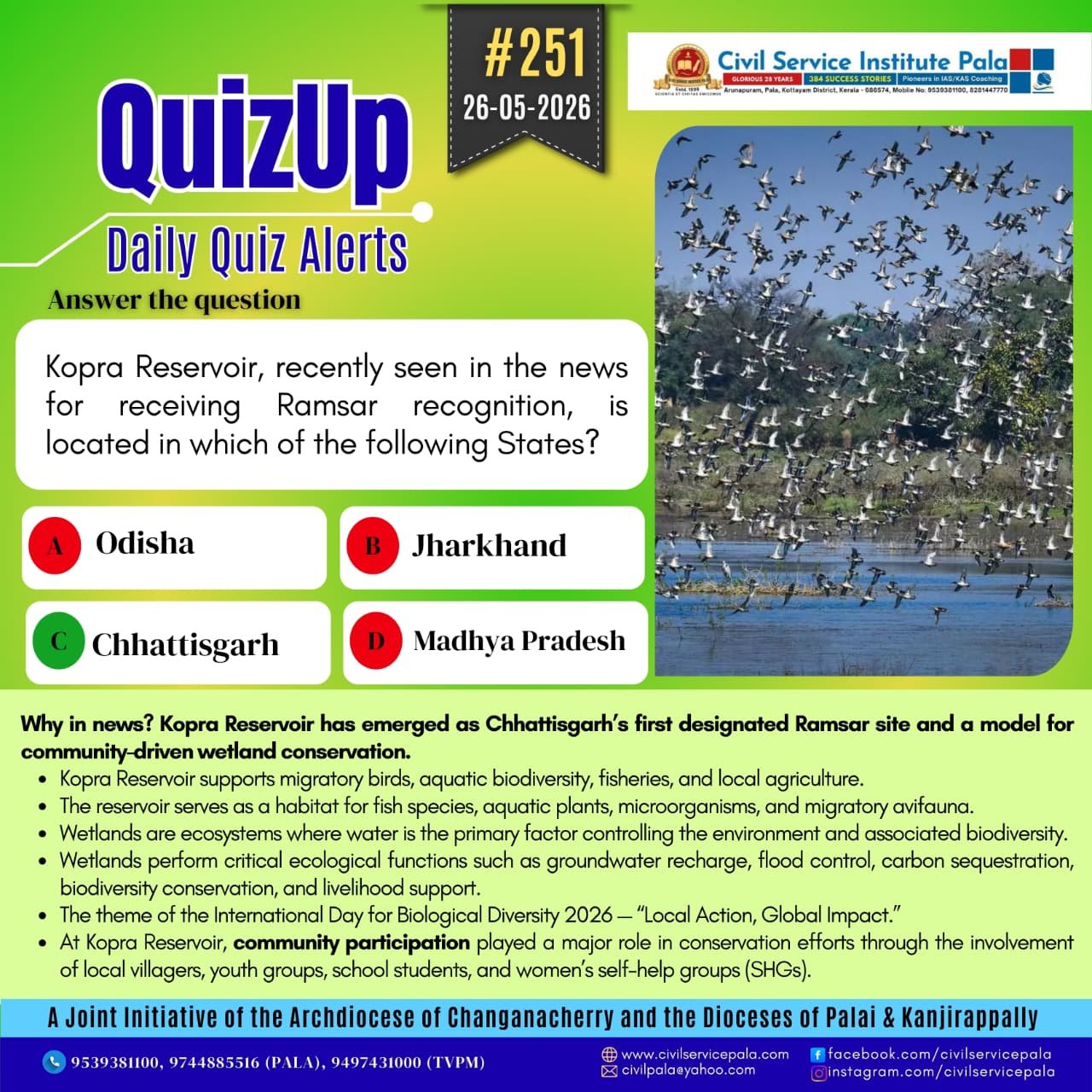
Kopra Reservoir
Kopra Reservoir has emerged as Chhattisgarh’s first designated Ramsar site and a model for community-driven wetland conservation.
Important Features of Kopra Reservoir
Kopra Reservoir supports migratory birds, aquatic biodiversity, fisheries, and local agriculture.
The reservoir serves as a habitat for fish species, aquatic plants, microorganisms, and migratory avifauna.
The Ramsar recognition highlights the ecological importance of the wetland at both national and international levels.
Community participation played a major role in conservation efforts through involvement of local villagers, youth groups, school students, and women’s self-help Groups (SHGs).
The wetland is being presented as a model of decentralised environmental governance and community-led climate action.
Wetlands Ecosystems
Wetlands are ecosystems where water is the primary factor controlling the environment and associated biodiversity.
Wetlands perform critical ecological functions such as groundwater recharge, flood control, carbon sequestration, biodiversity conservation, and livelihood support.
The theme of the International Day for Biological Diversity 2026 — “Local Action, Global Impact.”
Challenges
Wetlands across India face threats from encroachment, pollution, Urbanisation, excessive resource extraction, and Climate change impacts.
Loss of wetlands can reduce biodiversity, weaken local livelihoods, and increase ecological vulnerability.
Experts suggest that migratory bird habitats are increasingly threatened by habitat degradation and changing climatic conditions.
Effective conservation requires balancing ecological protection with local livelihood needs such as fisheries and agriculture.
